
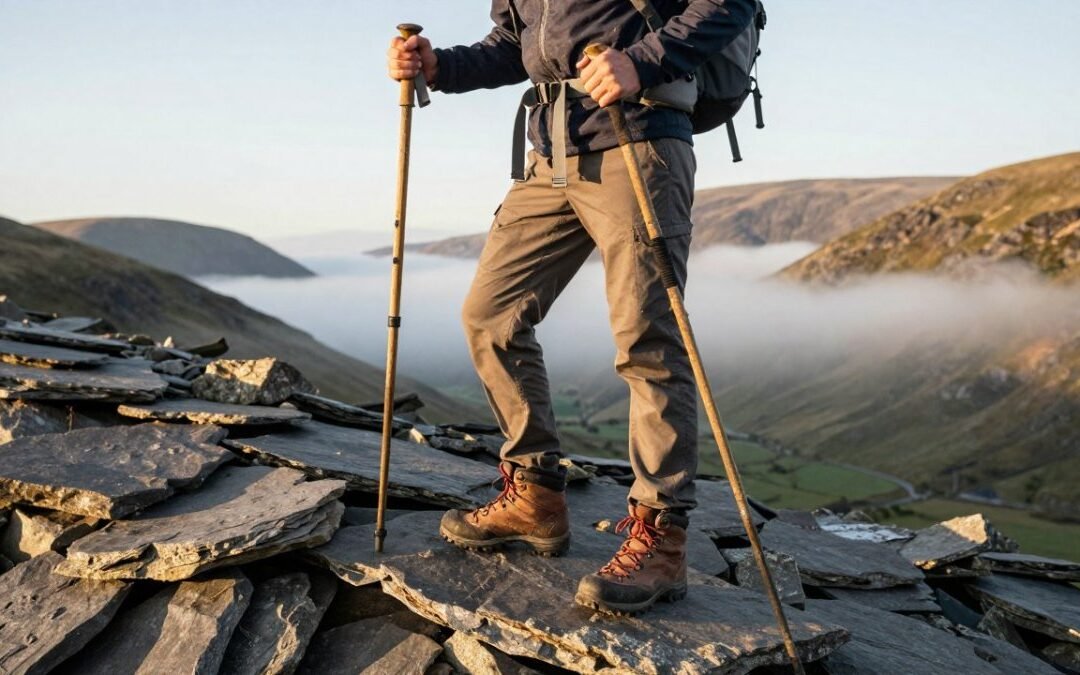
Last Updated: November 19, 2026
Quick Summary
To train for snowdonia hikes, follow a 12-week plan that builds from flat walks to hilly walks with a loaded pack, adding two weekly strength sessions and one long walk. Peak at three to four hours on hills with a full pack, then taper in the final two weeks.
- Test yourself with a 60-minute walk on hilly ground before choosing a route.
- The Llanberis Path is the gentlest and longest, suiting first-time hikers.
- Add one extra hill session per week from week 5 for the Watkin Path or Crib Goch.
- Do step-ups, squats, calf raises, lunges and stair climbing twice a week.
- Cut training volume in the last 10 days and take at least two rest days a week.
Table of Contents
- Why Snowdonia Hikes Demand Real Preparation
- How to Prepare for Climbing Yr Wyddfa: Know Your Starting Point
- Your Snowdon Training Plan: A Week-by-Week Schedule
- Exercises for Hill Walking: Strength and Stamina Sessions
- Elevation, Terrain and Route-Specific Training
- Recovery, Injury Prevention and Tapering
- What to Pack for a Snowdonia Hike
- Book Your Group Adventure Day Before the Hike
- Frequently Asked Questions
Why Snowdonia Hikes Demand Real Preparation
Most people underestimate Yr Wyddfa. It is 1,085 metres of rock, and the weather turns fast.
That is why a proper plan matters.
Below, we’ll show you exactly how to train for Snowdonia hikes with a 12-week plan, route-specific sessions and a simple readiness check.
Snowdonia hikes are not a stroll. A typical summit day means 5 to 9 miles of walking, 700 to 1,000 metres of ascent and four to seven hours on your feet.
How to Prepare for Climbing Yr Wyddfa: Know Your Starting Point
The best way to prepare for climbing Yr Wyddfa is to test your current fitness honestly, then pick a route that matches it. Skip this step and you’ll either hate the day or quit halfway.
Assessing Your Current Fitness Level
Start with one simple test. Walk for 60 minutes on hilly ground and note how you feel.
- Comfortable and could go again: you have a solid base
- Tired but fine: you need 10 to 12 weeks
- Winded or sore: give yourself the full 12 weeks and start gently
A common mistake is testing on flat pavements. Hills use different muscles, so test on a slope.
Matching Your Route to Your Ability
The Llanberis Path is the gentlest and longest. It suits first-time hikers. The Watkin Path is steeper and rougher, so it needs more training.
| Route | Difficulty | Best For |
|---|---|---|
| Llanberis Path | Easy | Beginners, families |
| Ranger Path | Moderate | Steady walkers |
| Pyg Track | Moderate | Fit day walkers |
| Miners’ Track | Moderate | Scenic first ascents |
| Watkin Path | Hard | Experienced hill walkers |
| Crib Goch | Very hard | Scramblers only |
Your Snowdon Training Plan: A Week-by-Week Schedule
A Snowdon training plan works best over 12 weeks, but the schedule has to be built around your chosen route, not a generic climb. The table below gives a realistic weekly structure for someone starting from a moderate base and aiming at the Llanberis Path or Pyg Track. If you are targeting the Watkin Path or Crib Goch, add one extra hill session per week from week 5 and extend the long walk by 30 minutes from week 7.
| Week | Walking | Strength | Long walk | Focus |
|---|---|---|---|---|
| 1 | 3 × 30 min flat | 2 × 20 min | 60 min flat | Establish routine |
| 2 | 3 × 35 min flat | 2 × 20 min | 75 min flat | Add time on feet |
| 3 | 2 × 40 min flat, 1 × 40 min hilly | 2 × 25 min | 90 min flat | Introduce slopes |
| 4 | 2 × 45 min flat, 1 × 45 min hilly | 2 × 25 min | 90 min hilly | Recovery week, keep effort easy |
| 5 | 2 × 45 min hilly, 1 × 60 min hilly | 2 × 25 min | 2 hr hilly, 4 kg pack | Add pack weight |
| 6 | 2 × 60 min hilly, 1 × 60 min hilly | 2 × 30 min | 2.5 hr hilly, 5 kg pack | Build stamina |
| 7 | 2 × 60 min hilly, 1 × 75 min hilly | 2 × 30 min | 3 hr hilly, 6 kg pack | Peak load begins |
| 8 | 2 × 60 min hilly, 1 × 75 min hilly | 2 × 30 min | 3 hr hilly, 6 kg pack | Consolidate |
| 9 | 2 × 75 min hilly, 1 × 90 min hilly | 2 × 30 min | 3.5 hr hilly, 7 kg pack | Peak week |
| 10 | 2 × 75 min hilly, 1 × 90 min hilly | 2 × 30 min | 4 hr hilly, 7 kg pack | Peak week |
| 11 | 2 × 45 min easy, 1 × 45 min hilly | 1 × 20 min | 90 min easy | Taper begins |
| 12 | 2 × 30 min easy | 1 × 15 min | 60 min easy | Rest and walk |
Weeks 1-4: Building the Base
Walk three times a week. Keep two walks flat and easy at 30 to 45 minutes, and make the third a longer walk of 60 to 90 minutes. Add two short strength sessions of 20 to 25 minutes: squats, step-ups and calf raises. The aim is consistency, not fatigue. If you finish a week feeling wrecked, repeat it rather than moving on.
Weeks 5-8: Adding Hills and Load
Swap one flat walk for a hilly one each week. Carry a daypack with 4 to 6 kg, and increase your long walk to two hours by week 6 and three hours by week 8. This is where stamina builds. Keep the pace conversational and take short breaks every 45 minutes.
Weeks 9-12: Peak, Taper and Walk
Weeks 9 and 10 are your peak. Do one long hill walk of three to four hours with a full pack, and keep the other sessions shorter. Week 11 is a taper: cut volume by half and drop the pack weight. Week 12 is light walking only, with a short easy walk two days before the summit. Watch out: doing too much in the final ten days is the most common way to arrive tired.
Adjusting the Plan to Your Starting Fitness
If your 60-minute hill test left you winded or sore, repeat weeks 1 and 2 before moving on, and cap the long walk at 90 minutes until week 6. If you are already comfortable on hilly ground, start at week 3 and add 15 minutes to every long walk. The plan is a framework, not a fixed contract: the right progression is the one that leaves you fresher after each long walk, not more exhausted.
Exercises for Hill Walking: Strength and Stamina Sessions
The best exercises for hill walking train your legs, your lungs and your balance. You do not need a gym.
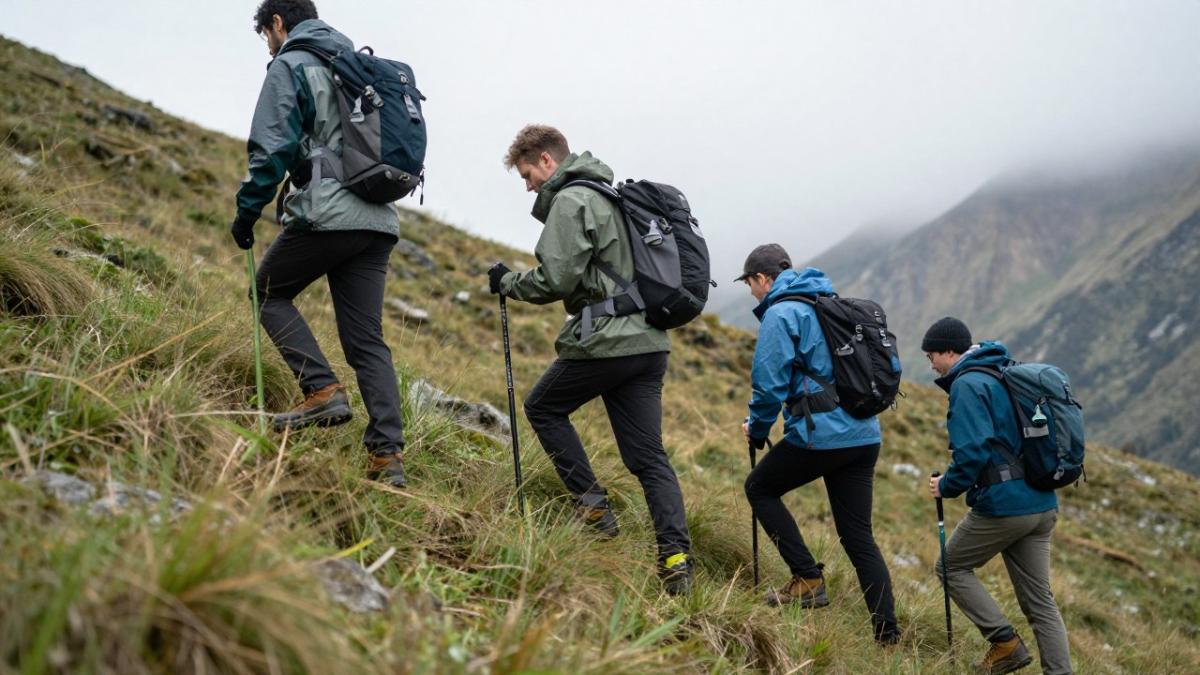
Do these twice a week:
- Step-ups: 3 sets of 12 per leg on a sturdy step
- Squats: 3 sets of 15
- Calf raises: 3 sets of 20
- Lunges: 3 sets of 10 per leg
For stamina, add one HIIT session a week. Try 30 seconds of fast stair climbing, then 90 seconds of easy walking. Repeat eight times.
What most guides miss is ankle strength. Stand on one leg for 30 seconds a day and your walking boots will feel far more stable on rough ground.
Elevation, Terrain and Route-Specific Training
Elevation gain is the part that catches people out. A flat 10-mile walk does not prepare you for 1,000 metres of ascent. Train on slopes, and train on rough ground.
Build terrain practice into your long walks:
- Walk on grass, gravel and loose rock
- Practise walking uphill at a steady, sustainable pace
- Descend on tired legs, since descent strains knees most
For the Llanberis Path, focus on steady endurance. For the Pyg Track or Watkin Path, add rocky ground and short scrambles. A practice hike in the weeks before is the single best rehearsal.
Recovery, Injury Prevention and Tapering
Recovery is training. Many walkers skip rest days and arrive at the mountain tired. Take at least two rest days a week.
Watch out: doing every session at full effort is the fastest route to a sore knee or a strained calf. Keep most walks easy.
Simple habits that help:
- Stretch calves and hamstrings after long walks
- Sleep well in the final week
- Eat protein after strength sessions
- Cut training volume in the last 10 days
Tapering means doing less, not nothing. A short easy walk two days before keeps your legs sharp.
What to Pack for a Snowdonia Hike
What to pack for a Snowdonia hike comes down to layers, water, footwear and a contingency plan. Mountain weather changes fast, so pack for wind and rain even on a bright morning. The list below is built for a full summit day of five to nine hours, not a valley stroll.
- Walking boots with good ankle support, worn in before the day
- Moisture-wicking base layer and a spare in the pack
- Insulating mid-layer such as a fleece or light synthetic jacket
- Waterproof jacket and trousers, not just a showerproof shell
Layering for Changing Mountain Weather
The mechanism is simple: start cold, add layers as you climb, and remove them before you sweat. A common pattern is a base layer, a mid-layer and a waterproof shell. On the summit, wind chill can make 10°C feel close to freezing, so the hat and gloves earn their place. Watch out: cotton holds sweat and chills you on the descent, so leave it at home.
Route-Specific Packing
For the Llanberis Path, a lighter pack is fine because the route is steady and well defined. For the Pyg Track or Watkin Path, add a paper map and compass, since rocky sections and cloud can obscure the line. For Crib Goch, add a helmet and consider a rope if you are not confident on exposed ground. The longer the route, the more water and food you carry, and the more important the foil blanket becomes.
Weather, Season and Contingency Planning
Check the Met Office mountain weather forecast before you set off, and read the AdventureSmart Wales advice on preparing for the mountains for safety guidance. In winter, add microspikes or crampons and an ice axe only if you have been trained to use them; otherwise choose a lower route. If wind is forecast above 40 mph on the summit, or cloud is down to the valley, postpone.
Book Your Group Adventure Day Before the Hike
Training is only half the fun. A group day out before the walk builds team spirit and gets everyone moving.
Paintball Wales runs low impact paintball, suitable for mixed ages from 8 upwards and for groups of all sizes. We are the longest-established dedicated outdoor activity paintball park in North Wales, with over 20 years of experience.
See what a day with us involves, check our prices for groups, explore our team-building days, or look at our kids and low-impact options.
Your group deserves a warm-up that everyone will remember. Get started with Paintball Wales and book a day that mixes adventure with proper organisation.
Frequently Asked Questions
How fit do you need to be to hike in Snowdonia?
You do not need to be an athlete, but you should be able to walk for three to four hours on uneven ground without becoming exhausted. A good benchmark is managing 10 to 12 kilometres with some hills comfortably. If you can hold a conversation while walking uphill, your fitness is in a reasonable starting place. Give yourself at least eight to twelve weeks to build up before tackling a summit route, and choose a shorter path such as the Llanberis Path for your first attempt.
How long should I train before a Snowdonia hike?
Aim for eight to twelve weeks of structured training if you are new to hill walking, or four to six weeks if you already exercise regularly. Your Snowdon training plan should include two or three walks per week, gradually increasing distance and elevation gain. Build in at least one longer practice hike of four to five hours in the final month. If you are short on time, prioritise consistency over intensity: three shorter walks each week beat one exhausting weekend outing.
What exercises help prepare for a mountain hike?
The most useful exercises for hill walking are step-ups, lunges, squats and calf raises, which mirror the demands of climbing. Add stair climbing or treadmill incline sessions to build uphill stamina, and single-leg balance work to protect your ankles on rough terrain. Two strength sessions a week is enough. Pair this with regular long walks in your walking boots so your feet and joints adapt to the load before the day itself.
What should I pack for a Snowdonia hike?
Pack waterproof layers, moisture-wicking clothing, spare warm layers, walking boots with ankle support, a map and compass, a headtorch, and at least two litres of water with high-energy food. Mountain weather changes fast, so a waterproof jacket and trousers go in every pack regardless of the forecast. Add a basic first aid kit and a charged phone. Keep your daypack light, ideally under 10 kilograms, so the ascent stays comfortable.
