
Table of Contents
- Is Paintball Suitable for Rowdy Teenagers? The Short Answer
- Low Impact Paintball for Teenagers: What Changes
- Paintball Safety Rules for Youth Groups
- Psychological and Physical Benefits of Paintball for Teenagers
- How to Organise a Paintball Birthday Party for Teenagers
- What Teenagers Can Expect on the Day
- Frequently Asked Questions
Last Updated: August 28, 2026
Is Paintball Suitable for Rowdy Teenagers? The Short Answer
Is paintball suitable for rowdy teenagers? The honest answer is yes, and often more so than for well-behaved ones. Paintball channels exactly the kind of energy that makes teenagers difficult to manage in classrooms or at parties: competitive instincts, physical restlessness, a need for excitement, and a desire to test boundaries. At Paintball Wales, we’ve been running sessions for teen groups for over 20 years, and the rowdiest groups frequently end the day the most satisfied.
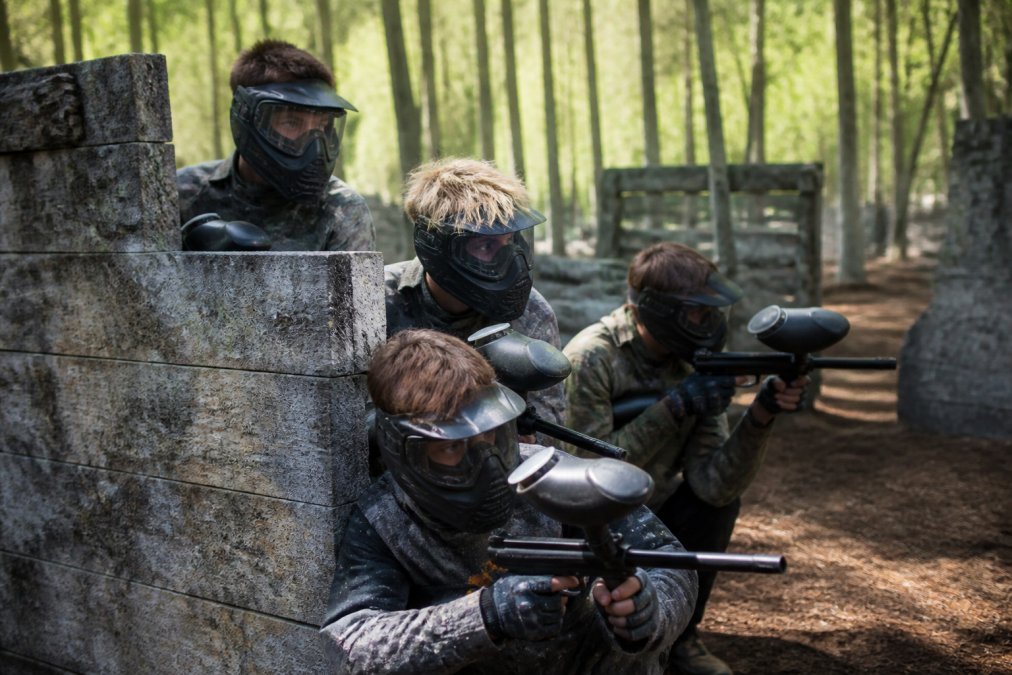
The activity is structured, professionally supervised, and conducted within clear safety protocols. That structure is precisely what makes it work for high-energy groups. Below, we’ll cover age requirements, the case for low-impact options, how marshals manage behaviour on the field, and everything parents need to prepare.
Age Restrictions and Minimum Age Requirements
Most dedicated paintball venues in the UK set a minimum age of 8 years for low-impact paintball and 12 years for standard paintball. These thresholds reflect the physical and cognitive readiness required to follow safety briefings, handle equipment responsibly, and respond to marshal instructions under pressure.
Parental consent is required for all players under 18. Most venues provide liability waivers that a parent or legal guardian must sign before the session begins. For group bookings involving minors, it is worth confirming with the venue whether the supervising adult needs to be present on site throughout the event or whether a signed consent form is sufficient.
The Health and Safety Executive guidance on outdoor activity providers outlines the duty of care obligations that reputable venues must meet when working with young people. Any venue operating without a clear risk assessment and age-appropriate equipment should be avoided.
Pros and Cons of Paintball for Teenagers
Before booking, it helps to weigh this up clearly.
Pros:
- Provides a structured outlet for high energy and competitive instincts
- Develops genuine teamwork and communication under pressure
- Physical activity with real cardiovascular benefit
- Supervised environment with clear rules and consequences
- Low-impact options significantly reduce the risk of bruising or discomfort
- Memorable, social experience that builds group cohesion
Cons:
- Standard paintball can cause bruising, particularly at close range
- Some teenagers may find the noise or intensity overwhelming initially
- Requires appropriate clothing and preparation to be comfortable
- Not suitable for players with certain medical conditions without medical clearance
The cons shrink considerably when you choose a venue that offers low-impact paintball and employs experienced marshals. The pros, on the other hand, are substantial and often underestimated.
Low Impact Paintball for Teenagers: What Changes
Low-impact paintball is not a watered-down version of the game. It is the same adrenaline-filled, team-based combat simulation, played with equipment calibrated to reduce the force of impact without removing the thrill.
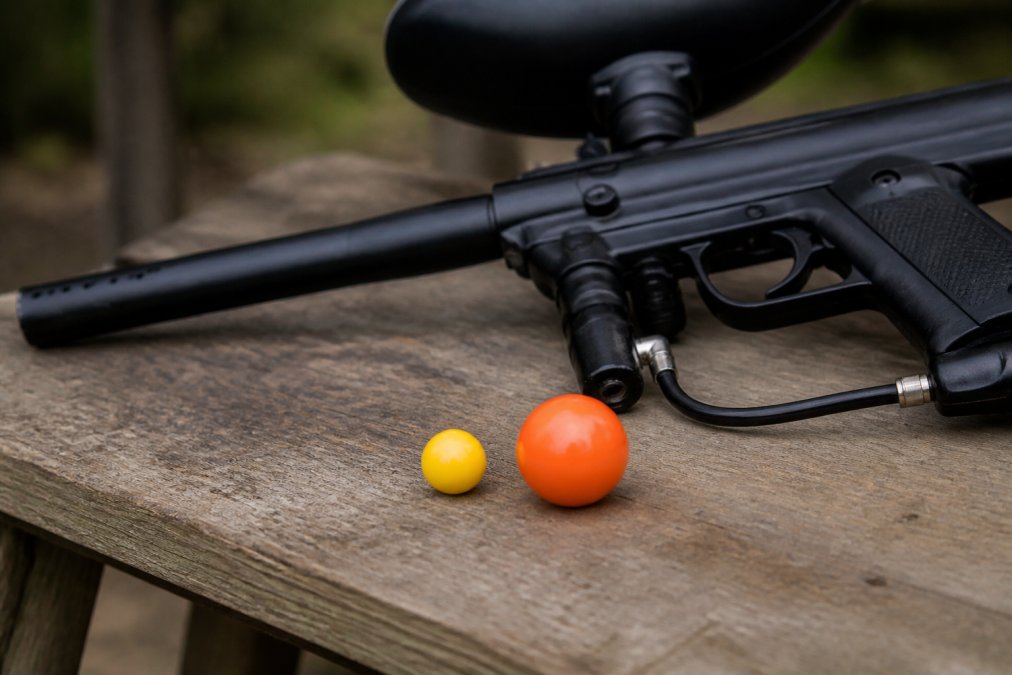
0.50 Caliber vs 0.68 Caliber: The Practical Difference
Standard paintball uses 0.68 caliber ammunition. These are the paintballs most adults associate with the sport, and they travel at higher impact velocity. At close range, they can leave bruises, particularly on players wearing thin clothing or minimal padding.
Low-impact paintball uses 0.50 caliber ammunition. The smaller projectile carries less kinetic energy at impact, which translates directly to a gentler hit. Most first-time players, including teenagers with sensitive skin, report the sensation as a firm tap rather than a sting.
| Feature | 0.50 Caliber (Low Impact) | 0.68 Caliber (Standard) |
|---|---|---|
| Ball size | Smaller | Larger |
| Impact force | Reduced | Higher |
| Bruising risk | Low | Moderate to high |
| Recommended for | Under 16s, first-time players | Experienced adult players |
| Adrenaline level | High | High |
| Game scenarios available | Full range | Full range |
The key point: switching to 0.50 caliber does not reduce the fun. Game scenarios, team dynamics, competitive play, and the full rush of the experience remain identical. What changes is the physical consequence of taking a hit, which matters enormously for younger players and parents deciding whether to book.
If your group includes a mix of ages, low-impact paintball is the sensible default. It keeps the experience accessible for younger players without making it feel like a compromise for older ones.
Paintball Safety Rules for Youth Groups
Paintball safety rules for youth groups are non-negotiable, and any reputable venue will enforce them rigorously from the moment players arrive.
The safety briefing is the foundation. Before any game scenario begins, every player receives a full briefing covering mask protocols, no-shoot zones, surrender rules, and what to do if they need to leave the field. Teenagers who appear distracted during a briefing are typically asked to repeat key points back to the marshal. This is not optional.
Mandatory Safety Equipment for Teenage Paintballers
Every player, regardless of age, must wear the following throughout active play:
- Full-face mask with protective goggles: This is the single most important piece of equipment. Masks must remain on at all times on the field. No exceptions.
- Protective clothing: Long sleeves and trousers are mandatory. Many venues provide padded overalls for additional protection.
- Neck protection: A scarf or purpose-made neck guard prevents hits to exposed skin around the collar.
- Gloves: Hands and knuckles are particularly vulnerable. Gloves reduce discomfort significantly.
According to British Standards Institution guidance on protective equipment for sport, face and eye protection used in paintball should meet appropriate impact resistance standards. Reputable venues use certified equipment and replace damaged masks before each session.
Never allow a player to remove their mask on the field, even briefly. This is the most common cause of serious paintball injuries and any venue that permits it should be avoided immediately.
How Marshals Manage Rowdy Behaviour on the Field
This is the part most parents are actually asking about when they want to know whether is paintball suitable for rowdy teenagers.
Marshals are not referees in the traditional sense. They are active participants in managing the energy of the group. Experienced marshals read the room from the safety briefing onwards. They identify the loudest players, the ones most likely to push boundaries, and they position themselves accordingly during gameplay.
When a player breaks a rule, the response is immediate and proportionate. Minor infractions result in a verbal warning and a brief removal from the active game. Repeated or serious breaches result in removal from the field entirely. Most teenagers, when they understand that their place in the game depends on following the rules, comply quickly. The competitive environment creates its own discipline.
A common mistake parents make is assuming rowdy teenagers will disrupt the experience for everyone else. In practice, the opposite is often true. High-energy players tend to throw themselves into game scenarios with genuine commitment, which raises the energy of the whole group.
Psychological and Physical Benefits of Paintball for Teenagers
Most guides stop at “it’s good exercise.” The psychological case for paintball with high-energy teenagers is considerably more interesting.
CALL: 01248 340000 / 07557 340000 NOW!! →
Paintball places teenagers in a structured environment where their natural competitiveness and physical energy are not just tolerated but required. For young people who struggle in traditional settings, this reframing can be genuinely significant. The activity demands communication, rapid decision-making, and trust in teammates, all under real pressure and with immediate consequences for poor choices.
The physical benefits are straightforward: sustained active play, cardiovascular effort, and the kind of full-body engagement that screen-based activities cannot replicate. According to Sport England’s research on youth physical activity, outdoor recreation that combines social interaction with physical challenge produces stronger engagement and repeat participation than solitary exercise.
There is also a conflict resolution dimension that rarely gets mentioned. When teenagers argue over game scenarios, marshals facilitate resolution in real time. Players learn to disagree, negotiate, and move on quickly, because the game stops until they do. For groups with existing social tensions, this can be genuinely useful.
Paintball does not just burn energy. For rowdy teenagers specifically, it provides a structured context where their instincts become assets rather than problems, which is a different thing entirely.
How to Organise a Paintball Birthday Party for Teenagers
Organising a paintball birthday party for teenagers is straightforward when you plan the logistics properly. The most common problems, arriving underprepared or with the wrong expectations, are entirely avoidable.
Start by confirming the minimum and maximum group size with the venue. Most venues require a minimum number of players to run a session, and exceeding the maximum affects the quality of the experience. Confirm whether the venue can accommodate a mixed-age group if you have younger siblings attending.
Book early, particularly for weekend slots in spring and summer. These fill quickly, especially for Saturday birthday parties.
Parental Preparation Checklist
Use this before the day to avoid common problems:
- Confirm the minimum age requirement and check all guests meet it
- Collect signed parental consent forms from every player under 18
- Remind guests to wear or bring long-sleeved clothing and sturdy footwear
- Advise against wearing white or light-coloured clothing (paintball stains)
- Check whether the venue provides overalls or whether players need their own
- Confirm whether the venue has catering, or arrange food separately
- Establish a clear meeting point and arrival time with all parents
- Brief the birthday group on basic safety expectations before arrival
- Ask the venue about their policy for players who want to sit out
- Confirm what is included in the price and what costs extra
Paintball Wales has been running birthday party sessions for over 20 years, and the groups that arrive prepared consistently have the best experience. A quick call to the venue before the day resolves most questions.
What Teenagers Can Expect on the Day
The day typically follows a clear structure, and knowing what to expect removes most of the pre-event anxiety for both teenagers and parents.
Arrival and registration: Players check in, waivers are confirmed, and equipment is distributed. This is also when the safety briefing takes place.
Safety briefing: Every player receives a full rundown of the rules, the field layout, and what to do in an emergency. Marshals take questions seriously at this stage.
Game scenarios: Most sessions run multiple game scenarios across the day, each with different objectives. Common formats include capture the flag, team elimination, and zone control. Marshals explain each scenario before it begins.
Breaks between games: Players return to a safe zone between scenarios to reload, hydrate, and recover. This is when the social side of the day really kicks in.
End of session: Equipment is returned, and players typically leave with a clear sense of which team won and who performed best. For competitive teenagers, this matters.
For groups travelling from further afield, the Paintball Wales site at the foot of Snowdonia National Park offers surroundings that make the day feel like a genuine adventure rather than a trip to an industrial estate. The location adds something that a suburban venue simply cannot replicate.
First-time players almost universally report that the experience is less intimidating and more fun than they expected. The adrenaline is real. The bruising, with low-impact options, is minimal. The group dynamics that emerge during competitive play are often the part teenagers talk about longest afterwards.
So, is paintball suitable for rowdy teenagers? Structured outdoor activity with professional supervision, age-appropriate equipment, and experienced marshals is precisely the environment that high-energy teenagers respond well to. The challenge is finding a venue that genuinely knows how to manage those groups, not just tolerate them. Paintball Wales has been doing exactly that for over 20 years, with low-impact options, experienced staff, and a location that makes the whole day feel like an event. Call us on 01248 340000 or 07557 340000 to discuss your group and get a quote.
Frequently Asked Questions
Does paintball hurt for a 14-year-old?
Standard 0.68 caliber paintball can leave bruising, especially on younger or lighter players. For teenagers, low-impact paintball using 0.50 caliber rounds is a much better fit. The smaller, lighter balls travel at a lower impact velocity, so the sting is noticeably reduced. Wearing full protective clothing over the arms and legs reduces discomfort further. Most 14-year-olds playing low-impact paintball describe the sensation as a light flick rather than a painful hit.
What is the minimum age for paintball in the UK?
Most UK paintball venues set the minimum age at 8 for low-impact paintball and 12 for standard paintball, though individual venue policies vary. Players under 16 typically require written parental consent before taking part. Age-appropriate equipment, supervised play, and a thorough safety briefing are standard requirements regardless of which format is used. Always confirm the specific age policy with your chosen venue before booking.
Is low-impact paintball better for beginners and teenagers?
Yes. Low-impact paintball uses 0.50 caliber rounds, which are lighter and travel at a lower velocity than standard 0.68 caliber ammunition. This makes it far more suitable for first-time players, younger teenagers, and anyone with concerns about bruising. The game scenarios, team-building elements, and adrenaline rush remain exactly the same. The only real difference is that players feel more confident moving around the field, which often makes the experience more enjoyable overall.
Why is paintball a good team-building activity for teenagers?
Paintball puts teenagers in situations where they must communicate, assign roles, and adapt tactics under pressure. For rowdy or high-energy groups, the structured competitive play channels that energy productively. Game scenarios require players to listen, cooperate, and resolve disagreements quickly. Research consistently links active outdoor recreation with improved group dynamics and social development. The shared experience of competitive play also builds team spirit in a way that classroom-based activities rarely achieve.